
Construction of the approved reactor projects is expected to take five to six years after receiving financial approval.

Researchers at IIT-Guwahati have developed an inexpensive and efficient catalyst for producing hydrogen from water, a crucial step for the National Green Hydrogen Mission and the transition to sustainable energy. The catalyst uses nickel salt and an anthracene-based organic molecule, offering a cleaner alternative to fossil fuel-derived hydrogen.

Researchers from IIT Bhubaneswar and Virginia Commonwealth University have theoretically predicted a new two-dimensional material, a FeCl3 monolayer, exhibiting i-wave altermagnetism. This discovery holds significant potential for developing faster, more compact, and energy-efficient electronic devices, including applications in high-density memory, spintronics, and quantum technologies.

The government introduced the SHANTI Act, 2025, to support the mission and open the sector to private participation.

Adani Group Chairman Gautam Adani announced a capital expenditure programme of over 2 trillion for Adani Power, aiming for 45 gigawatts (Gw) capacity in five years, including a significant entry into nuclear power with a target of 10 Gw by 2035 through Adani Atomic Energy.

All five Indian teenagers who competed at the International Physics Olympiad 2026 won gold medals; thanks to their achievement, India shared the world No 1 ranking with China, Kazakhstan, Russia, South Korea and Taiwan.

NITI Aayog member Gobardhan Das asserted that India possessed a rich scientific tradition that suffered setbacks during centuries of foreign domination, with its repository of knowledge systematically destroyed by invaders.

India's 500 MWe Prototype Fast Breeder Reactor (PFBR) at Kalpakkam in Chennai has achieved first criticality, marking a significant advancement in the country's nuclear energy capabilities and long-term energy security.

A sovereign cloud, our own DNS root and Root CA, a defence-led research base that builds for keeps, and a real national cybersecurity strategy that outlives electoral cycles are not vanity projects. They are the difference between a nation that can be switched off and one that cannot, points out Venkata Satish Guttula.

Through his commitment to democratic norms, debate, dissent and constitutionalism, Jawaharlal Nehru helped ensure that parliamentary democracy took deep root in independent India. Utkarsh Mishra evaluates Nehru's 17 years as India's first prime minister, examining his role in nation-building, democratic institution-building, economic planning, scientific advancement and foreign policy.

Bringing international recognition to Assam, young scientist Dr Shekhar Suman Bora has been honoured with the prestigious 'University Innovator Award' at the 2026 Texas Innovation Conference & Awards held in the United States.

In a development that could reshape West Asia's security landscape, US President Donald Trump announced Friday that he will convene an emergency meeting in the White House Situation Room to make a final decision on a broad, multi-part peace deal with Iran.

China is significantly expanding its nuclear power sector, aiming to become a global leader by 2030. The country has the capacity to construct up to 50 nuclear reactors simultaneously, reducing reliance on fossil fuels.

A three-storey commercial building collapsed near Saket Metro station in south Delhi, resulting in four fatalities. Rescue operations have concluded, and an inquiry into the cause of the collapse has been initiated.

If one has to compare the tenures of the two prime ministers one must credit Nehru with laying the foundations on which Modi is building a grand edifice, asserts Colonel Anil A Athale (retd).

Accel and Google's AI Futures Fund have announced the five startups selected for the 2026 Atoms AI Cohort, focusing on enterprise, voice, and industrial AI solutions, with each startup receiving significant investment and resources.

'Our problem is not a budget deficit but a trust deficit. We need to trust our institutions and industries to innovate and lead. That is the way forward for India.'

In many ways, this is only the beginning -- of a new chapter in India's nuclear story, and of a future where its vast thorium reserves could finally power its ambitions.
Scientists at the GraphIN 2026 conference in Kochi highlighted graphene's potential in water purification, discussing graphene-based membranes and nanocomposites for removing pollutants and improving desalination.

Donald Trump has issued a stern warning to Iran, stating that the US will take a tougher stance if a diplomatic resolution regarding its nuclear programme is not reached soon.
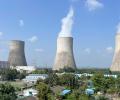
The Bill is likely to pave the way for amending two existing legislations -- the Atomic Energy Act 1962, and the Civil Liability for Nuclear Damage Act 2010.
Researchers at IIT Bombay have proposed a new test, dynamical fidelity susceptibility (DFS), to measure the 'quantumness' of gravity, suggesting that conventional entanglement-based tests may be insufficient.

On Sunday, November 2, 2025, Iranian President Masoud Pezeshkian visited the Atomic Energy Organisation of Iran headquarters in Tehran, underscoring his administration's focus on advancing the country's nuclear technology for peaceful purposes.

The Indian government has introduced a bill to overhaul the civil nuclear sector, allowing private participation and establishing a new liability regime. The SHANTI Bill, 2025, aims to repeal existing acts and address industry concerns.

The operator's liability in the case of an incident is limited to 3,000 crore for reactors with thermal power above 3,600 Megawatt; 1,500 crore for reactors with thermal power between 1,500 Mw and 3,600 Mw; 750 crore for reactors with thermal power between 750 Mw and 1,500 Mw; 300 crore for reactors with thermal power between 150 Mw and 750 Mw; and 100 crore for reactors having thermal power up to 150 Mw, fuel cycle facilities other than spent fuel reprocessing plants and transportation of nuclear materials.

India's nuclear energy share in total installed capacity remains limited, fluctuating between 1.9 per cent and 2.9 per cent from FY10 to FY24.

Over the years, India-EU ties have grown, and covered trade, investment, climate change, science and technology, space, digital, mobility, and connectivity.

Israeli PM Benjamin Netanyahu has affirmed that the United States and his administration have achieved nearly total dominance over Iranian airspace following a series of coordinated military strikes.

Newly declassified documents from the United States National Security Archive have revealed that Pakistan's nuclear proliferation was a significant concern for both the US and Russia, with leaders expressing 'nervous' fears about the country's atomic stability.

What we are watching is something different: A fog manufactured and maintained by the people who started the war, so that the question of why it was started never has to be answered, observes Prem Panicker in his must read blog on the war in the Middle East.

The threat of wars hovers over the negotiations in Oman, but the good part is that Trump called the talks to be 'very good' and Iran's President Masoud Pezeshkian responded that they 'constitute a step forward', points out Ambassador M K Bhadrakumar.

India and Russia are expected to unveil a major nuclear energy partnership during Vladimir Putin's visit, potentially involving Russian small modular reactors and expanded cooperation as India pushes toward its 100-GW nuclear goal by 2047.
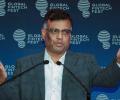
'We have seen that stablecoins lack the basic attributes of money, their advantages are neither unique nor unambiguous and their risks are all too real.'

The last rites of veteran Congress leader and former Union minister Shivraj Patil were performed with full state honours in his home district, Latur, in Maharashtra on Saturday, with many top leaders in attendance.
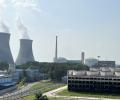
Extending its nuclear power plant supply relationship with India to the non-nuclear sector, Russia's integrated atomic power major Rosatom State Corporation is in talks for a 50:50 additive technology joint venture.
M R Srinivasan focused on the peaceful use of nuclear power at a time when the popular view among the 'hawks' was that India should build a nuclear arsenal as a deterrent.

Russian President Vladimir Putin expressed optimism about Russia-US relations, citing potential cooperation in the Arctic and Alaska. He acknowledged the current low level of relations but sees improvement with President Trump's administration. Putin also emphasized the importance of Russia's sovereignty and the role of its nuclear industry.

Fuel loading at India's first prototype fast-breeder reactor in Kalpakkam is expected to start next week, marking a significant step in the country's nuclear program.
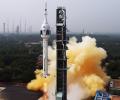
ISRO Chairman V Narayanan announces ambitious space program goals, including landing Indians on the Moon by 2040 and launching the 'Gaganyaan' mission in 2027. The agency is also working on a national space station and uncrewed missions.

'The heat shield technology for re-entry vehicles was first mastered in DRDO for the Agni missile.' 'This is why the Americans were so opposed to Agni in the 1980s, unlike other missiles -- it was a re-entry vehicle.'
